

Where the wild meets the canvas: Tanuja Sethi’s art inspired by Odisha’s birds and nature
Where the wild meets the canvas: Tanuja Sethi’s art inspired by Odisha’s birds and nature
By Shabiha Nur Khatoon
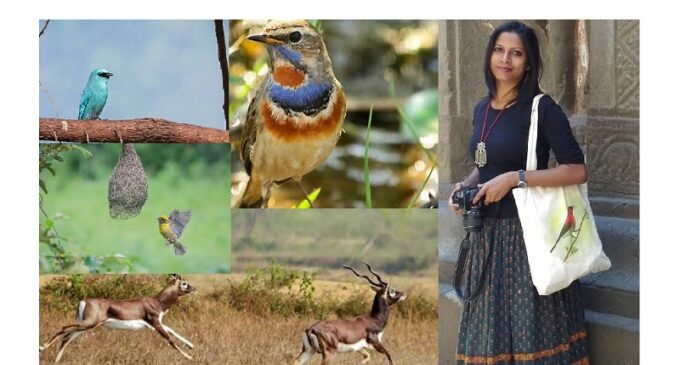
For Bhubaneswar-based artist, birdwatcher and photographer Tanuja Sethi, photography is more than capturing a fleeting moment through a lens. Her photographs and field observations of Odisha’s birds and landscapes serve as visual references and sources of inspiration for her hand-painted nature crafts, upcycled products and eco-friendly designs.
As the world observed World Photography Day on August 19, Sethi’s creative journey offered an interesting perspective on how photography can move beyond documentation to become a starting point for artistic expression and sustainable design.
Birds occupy a central place in Sethi’s field observations. Translating them from photographs into art requires patience, close observation and interpretation. “The process requires a lot of observation to translate and simplify reality into a selective artwork,” she says. Unlike photography, where the artist has little control over the environment or habitat, painting allows her to recreate, simplify and reinterpret what she observes.
Her artworks are consequently not merely literal representations of nature but personal expressions of it. At times, she introduces whimsical and non-realistic elements, allowing imagination to coexist with the authenticity of her field experiences.
Odisha’s rich natural and cultural heritage remains a major source of inspiration. Among the birds that repeatedly appear in her work is the Barn Owl, a species she encounters in both wild spaces and urban surroundings. The Indian Paradise Flycatcher and Oriental Magpie-Robin are also favourites, with their distinctive forms and personalities finding their way onto her canvases and designs.
Her photographs are an important part of this creative process. They serve as a personal visual archive, preserving details that may not always be fully captured during field observations. Position, posture, habitat and behaviour become valuable references when she conceptualises a new artwork or collection for Shop with Tanuja.
Her approach extends beyond art to sustainability. Through upcycled products and eco-friendly creations, she seeks to reduce waste while promoting products that are reusable, practical and suited to everyday life. Her slow-design philosophy reflects what she observes outdoors—the understanding that natural resources are finite and that consumption carries consequences.
Some of her most memorable wildlife encounters have also become enduring sources of inspiration. A Peregrine Falcon sighting at Mangalajodi stands out as one of her most cherished experiences. The bird’s speed and sharply defined features left a lasting impression on her and continue to influence her artwork.
Another memorable encounter was with Blackbucks in Ganjam district. Their grace and distinctive presence have likewise found expression in her paintings.
For Sethi, the camera, sketchbook, paintbrush and craft canvas are not separate worlds. They are different ways of observing and interpreting the same natural environment. Her photographs document moments in the field, her paintings transform those observations into personal expressions, and her eco-friendly products carry that connection into everyday life.
In her work, Odisha’s birds and landscapes are therefore more than artistic motifs. They are reminders of a living ecosystem—and of the possibility of turning close observation of nature into art that is meaningful, mindful and sustainable.


