

Strengthening Last-Mile Healthcare in Odisha and Chhattisgarh
By Nalini Sahu
Bhubaneswar, April 8: Odisha and Chhattisgarh present a striking paradox. While they sit at the heart of India’s mineral economy—supplying coal, bauxite, aluminium and iron ore that drive industrial growth—large parts of their rural hinterlands continue to lag behind national health indicators. Inaccessibility, malnutrition and limited access to quality care remain persistent challenges.
Against this backdrop, last-mile healthcare delivery has emerged as a critical intervention area. In mining and industrial corridors, CSR-led health initiatives are increasingly working to bridge geographical and systemic gaps in healthcare access.
For Vedanta Aluminium, which operates in several underserved regions of these two states, the focus has shifted towards building an integrated healthcare model—linking village-level detection with tertiary treatment. This approach aligns with findings from the National Family Health Survey-5 (NFHS-5), which highlights persistent gaps in nutrition, maternal health and early disease detection in underserved districts.
Over time, Vedanta Aluminium’s initiatives have demonstrated measurable impact. The company reports reaching over 7 lakh beneficiaries across Odisha and Chhattisgarh, conducting health awareness programmes for more than 4 lakh people, and recording nearly 1.74 lakh patient visits across its healthcare facilities.
When distance becomes the first barrier
In rural areas, access to healthcare often begins with overcoming distance. Primary health centres are frequently located several kilometres away, with limited transport options. Delays in treatment are therefore driven more by geography than intent.
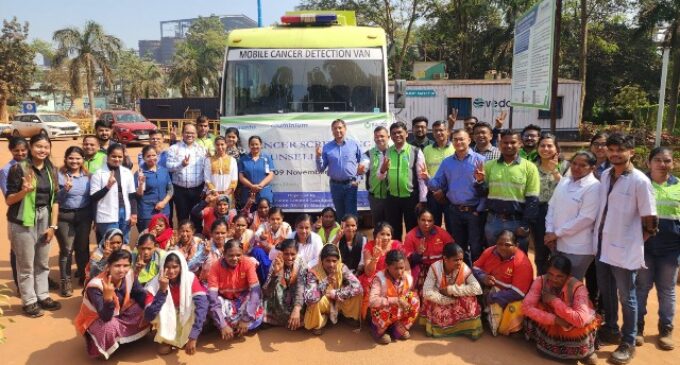
To address this, Vedanta’s interventions work closely with frontline health workers such as ASHAs and ANMs, strengthening early detection, referral systems and follow-up care. A key component of this strategy is the deployment of Mobile Health Units (MHUs), which function as travelling clinics delivering primary consultations, medicines, basic diagnostics and preventive health awareness at the village level.
These MHUs currently serve over 200 villages across districts such as Jharsuguda, Kalahandi and Sundargarh in Odisha, and Korba in Chhattisgarh. For many residents, they represent the first reliable point of medical contact.
However, outreach alone is insufficient without accessible referral infrastructure. Recognising this, Vedanta has also invested in strengthening local healthcare facilities. In Kalahandi, MSJK Hospital provides secondary care services, including emergency and specialist consultations, reducing dependence on distant urban centres. Similarly, the Vedanta Diagnostic Centre in Jharsuguda addresses critical gaps in diagnostic access, enabling timely treatment.
Bridging cancer care gaps
For complex diseases such as cancer, delayed diagnosis remains a major structural challenge. Patients from these regions often travel long distances to metropolitan hospitals, frequently at advanced stages of illness.
To address this, the BALCO Medical Centre (BMC) in Naya Raipur has been established as a regional tertiary oncology facility. With 170 beds, BMC offers a continuum of care—from screening and diagnosis to treatment and follow-up—closer to home.
Since its inception, the centre has treated over 66,000 patients and conducted more than 500 outreach screening camps. Notably, around 60 per cent of its patients come from rural and tribal areas, highlighting its importance as a regional healthcare lifeline.
Towards a connected healthcare continuum
Taken together, these interventions form a three-tiered model—prevention and awareness at the grassroots, early detection through mobile outreach, and access to specialised treatment through healthcare infrastructure. This integrated approach reduces travel burdens, shortens treatment timelines and strengthens healthcare delivery in remote geographies.
As Odisha and Chhattisgarh continue to power India’s industrial growth, the challenge lies in ensuring that this economic progress translates into improved human development outcomes. Strengthening last-mile healthcare systems will be central to achieving that goal.


