

Old Biju guard regroups as Odisha Nagarik Manch debuts, signals churn in BJD
By Nalini Sahu
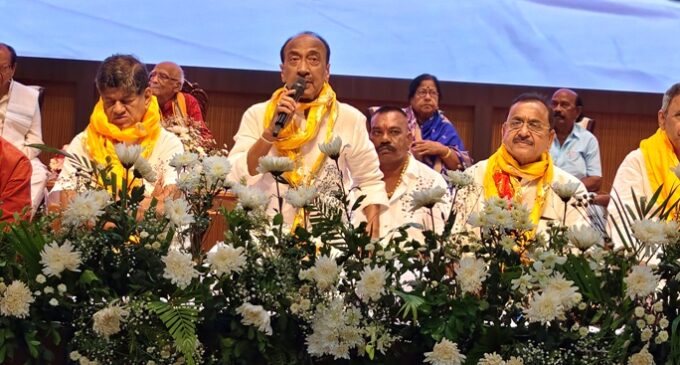
Bhubaneswar, April 17: The launch of Odisha Nagarik Manch on Friday, coinciding with the death anniversary of former Chief Minister Biju Patnaik, has added a new dimension to Odisha’s evolving political landscape, hinting at an emerging consolidation of the “old Biju guard” at a time of visible churn within the Biju Janata Dal (BJD).
Held at the auditorium of Odisha University of Agriculture and Technology, the gathering brought together several veteran leaders and long-time associates of Biju Patnaik, many of whom have, over the years, found themselves distanced from the core power structure of the party founded in his name.
Among those present were senior leaders such as Bijoy Mohapatra, Dilip Ray, Arvind Mohapatra, Soumya Ranjan Patnaik, Amar Satpathy and Pravat Tripathy, along with lawyers, intellectuals and supporters from across the State.
While the organisers projected the Manch as a non-political, ideological platform to uphold Biju Patnaik’s legacy, the subtext of the event suggested a deeper political undercurrent.
Speakers repeatedly emphasised that the legacy of Biju Patnaik transcends individuals and should be rooted in governance ideals such as decentralisation, inclusivity and empowerment. Bijoy Mohapatra, widely seen as the key force behind the initiative, framed the Manch as a corrective effort.
He stressed that Biju Patnaik’s vision centred on empowering women, backward classes and youth, and called for a return to those principles. His remarks—particularly the reference to aspirations being “buried” during a prolonged regime—were widely interpreted as an indirect critique of the leadership style under Naveen Patnaik.
Echoing this sentiment, Dilip Ray underlined that “Biju legacy is not about ‘who’ but about ‘what’,” reinforcing the idea that the movement is less about leadership succession and more about ideological reclamation.
The timing of the Manch’s launch is significant. It comes in the backdrop of growing unease within the BJD, which has been led by Naveen Patnaik since its formation in 1997. Critics within the party have increasingly pointed to centralisation of power and limited space for senior leaders.
Recent political developments have amplified these tensions. The cross-voting by six BJD MLAs in favour of a BJP-backed Rajya Sabha candidate—ironically Dilip Ray himself—resulted in the defeat of the party’s official nominee, Datteswar Hota, exposing cracks within the organisation.
Additionally, the party’s defeat in the 2024 Assembly elections has triggered introspection, with some leaders attributing the setback to over-centralisation and the growing influence of former bureaucrat V. Karthikeyan Pandian in party affairs.
Though the Odisha Nagarik Manch has not formally positioned itself as a political alternative, its composition and messaging indicate a possible attempt to regroup leaders who trace their ideological roots to Biju Patnaik but feel alienated in the current political framework.
“For now, the Manch presents itself as a socio-political platform aimed at reviving debate around governance values. However, its future trajectory—whether it remains an intellectual forum or evolves into a more assertive political formation—will depend on how the internal dynamics within the BJD unfold in the coming months,” said political analyst Prasanna Mohanty.


