

Pranab Patnaik: A voice that became the soundtrack of an era
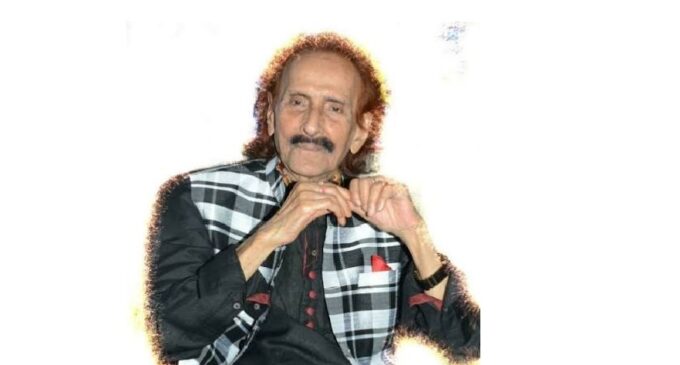
By A.K. Sahoo
There are voices that entertain, voices that impress, and then there are voices that become part of a people’s collective memory. Pranab Patnaik belonged to the last category.
With his death at 88, Odisha has lost one of its most distinctive and enduring playback singers—a voice that travelled across generations and helped give shape to the golden era of Odia film music. For countless listeners, his songs were not merely recordings; they were memories of youth, romance, separation, longing and the changing seasons of life.
Patnaik’s contribution was closely woven into the evolution of modern Odia cinema. He worked with some of the finest composers and lyricists of his time and brought a remarkable combination of clarity, emotion and restraint to his singing. His voice could carry tenderness without becoming sentimental and emotion without losing musical discipline.
Among the songs associated with his long career are “Majhire” from Sesha Shrabana, “Keun Nama Dhari Dakibu Tumaku” from Sindura Bindu, and “Ei Chhota Katha Tie Bhulana” from Arundhati. His repertoire also included popular numbers such as “Mono Moro Padma Patra Sama,” “Srabana Ratire Lagichi Nian,” “Mote Jebe Ati Eka,” “Pahadara Sepakhe” and “Tume Ago Pahanti.”
What distinguished Patnaik was his ability to make a song sound intimate. He did not merely sing the words; he inhabited them. Whether the mood was romantic, melancholic or reflective, his voice seemed to understand the emotional world of the lyric.
His association with Sindura Bindu was particularly significant. The film’s music, composed by Prafulla Kar, produced songs that remain part of Odisha’s musical memory, with Patnaik lending his voice to some of its memorable compositions. He won the State Film Award for Best Playback Singer for his work associated with the film.
His musical journey also extended beyond film songs. His recordings included non-film Odia music and ghazals, demonstrating a versatility that allowed him to move comfortably between different musical forms. His recorded repertoire continues to feature on major music platforms, underlining the lasting appeal of his work.
The tributes following his death have reflected not merely the loss of a singer but the passing of a cultural era. Chief Minister Mohan Charan Majhi described his demise as an irreparable loss to Odisha’s art and cultural world, recalling his timeless voice and the honours he received, including the Jayadev Award, Odisha Sangeet Natak Akademi Award and State Film Award.
But perhaps the most enduring tribute will come from ordinary listeners.
For a generation that grew up with his songs, Patnaik’s voice will continue to arrive unexpectedly—from an old radio recording, a television programme, a musical gathering or a familiar song played after years.
Artists leave behind awards and archives. Great singers leave behind something more enduring: a voice that refuses to disappear.
Pranab Patnaik’s voice is one such voice.
His journey may have ended, but the song goes on.


